The need to protect children online has never been more urgent. Statistics show that 80% of teenagers have received friend requests from strangers, 90% have been exposed to inappropriate push notifications, and nearly 50% struggle with attention deficit issues linked to excessive gaming. Sadly, most parents remain unaware of their children’s digital lives—only about 15% actually use monitoring tools to oversee smartphone activity.
Over the past two weeks, we tested nearly 20 Parental Control Apps designed primarily to safeguard children online. These services give parents real-time visibility into chat logs, browsing history, and activity across major messaging platforms—helping them steer their kids away from online predators, harmful content, and cybercrime.

One important caveat: none of these apps are free. If you’re determined to find a completely free solution, this review won’t be for you. We focus on paid tools because they offer the reliability, security, and features needed to truly protect your child in today’s digital world.
Best parental control software for iPhone – 2026
| 1. Eyezy Features: A mobile monitoring/parental control app for Android and iOS. On iOS, no installation is required – it syncs data via Wi-Fi or iCloud backup (no jailbreak needed). Supports stealth mode. Complies with GDPR and Google Play policies, requiring user consent. Main Functions: Real-time GPS tracking; geofencing with entry/exit alerts; SMS monitoring; keylogger; app usage restrictions; web filtering; SOS emergency button; iOS data synced via iCloud without installation. | Try Now |
| 2. Spynger Features: A covert mobile monitoring tool for Android and iOS. Requires physical access to the target device for installation; advanced features usually require root (Android) or jailbreak (iOS). Supports stealth mode (the app icon can be hidden). Main Functions: GPS location tracking; call log monitoring; SMS and social media message monitoring (e.g., WhatsApp, Snapchat); screen monitoring; near-real-time synchronisation (data updates with a delay of about 5–15 minutes). | Try Now |
| 3. mSpy Features: A comprehensive monitoring/spyware solution covering Android and iOS. Installation requires physical access to the device; advanced features (e.g., keylogger, screen recording) need root or jailbreak. Supports stealth mode. No free trial or money-back guarantee. Main Functions: Real-time GPS location; call, SMS, and email monitoring; social media monitoring (WhatsApp, Snapchat, X, Facebook Messenger, LINE, etc.); keylogger; screen recording; geofencing; remote blocking of Wi-Fi, websites, and apps. | Try Now |
| 4. FlexiSPY Features: An advanced, highly powerful monitoring solution supporting Android, iOS, Windows, and Mac. Requires physical installation; has stealth mode. Known for powerful VoIP call recording and ambient listening, but has suffered a data breach in the past and is flagged by many security vendors as commercial tracker. Main Functions: Call recording (including VoIP calls like Skype and LINE); remote microphone activation for ambient listening; keylogger; screen capture; SMS/email interception; GPS location tracking; downloading photos and videos from the target device; browser history monitoring. | Try Now |
| 5. iKeyMonitor Features: A family monitoring/parental control tool supporting iOS and Android. Works without root; supports stealth mode. Offers a 3-day free trial (no credit card required). The interface is somewhat outdated and synchronisation may experience delays. Main Functions: Real-time and historical GPS location tracking; call logs; SMS/MMS monitoring; social media monitoring (WhatsApp, Facebook Messenger, Snapchat, Telegram, Instagram); browser history and search records; photo monitoring; app usage; AI chatbot conversation monitoring; SIM card change alerts. | Try Now |
| 6. Norton Family Features: A parental control solution from the well-known security brand Norton, supporting Android, iOS, and Windows. Not covert monitoring – it requires the child’s knowledge and consent, with visible icons and interface. No root or jailbreak required. Offers a 30-day free trial. Main Functions: Web supervision and content filtering; search term monitoring; screen time management and restrictions; one-click device lock; GPS location tracking with 30-day history; geofencing and location alerts; app supervision; “School Time” mode (automatically blocks distracting websites during school hours). | Try Now |
Top 6 iPhone Monitoring Apps compared
| Feature / Aspect | Spynger | mSpy | FlexiSPY | ikeymonitor | Eyezy | Norton Family |
|---|---|---|---|---|---|---|
| Core Positioning | Covert mobile monitoring | Comprehensive monitoring/spyware | Advanced spyware | Family monitoring / parental control | Mobile monitoring / parental control | Parental control software |
| Supported Platforms | Android / iOS | Android / iOS | Android / iOS / Windows / Mac | Android / iOS | Android / iOS | Android / iOS / Windows |
| Installation Requirements | Physical access required; advanced features need root/jailbreak | Physical access required; advanced features need root/jailbreak | Physical access required | Physical access required | No installation needed for iPhone (Wi-Fi / iCloud sync) | Regular installation; no root/jailbreak required |
| Stealth Mode | ✅ Yes (icon can be hidden) | ✅ Yes | ✅ Yes | ✅ Yes | ✅ Yes | ❌ No (transparent – child must be aware) |
| Main Functions | • GPS tracking • Call/SMS monitoring • Social media monitoring • Screen monitoring • Near real-time sync (5-15 min delay) | • GPS location • Call/SMS/Email monitoring • Social media monitoring • Keylogger • Screen recording • Geofencing • Wi-Fi/website/app blocking | • Call recording (incl. VoIP) • Ambient listening (remote mic) • Keylogger • Screenshots • SMS/email interception • GPS tracking • Photo/video download | • GPS tracking (real-time + history) • Call logs • SMS/MMS monitoring • Social media monitoring • Browser history • Photo monitoring • SIM change alerts | • Real-time GPS tracking • Geofencing + alerts • SMS monitoring • Keylogger • App usage restrictions • Web filtering • SOS emergency button • iOS: no installation (Wi-Fi/iCloud sync) | • Web supervision + filtering • Search term monitoring • Screen time limits • One-click device lock • GPS tracking + 30-day history • Geofencing + location alerts • App supervision • “School Time” mode |
| Pricing / Trial | No free trialMonthly: $1.57/day; Quarterly $0.93/day; | No free trial1 month Premium: $39.99/mo; 3 months Premium: $19.99/mo; 6 months Premium: $15.99/mo; | No free trialLITE: $49.95/mo; PREMIUM:$79.00/mo; EXTREME: $119.00/mo | 3-day free trial (no credit card); from $9.90/month | No free trial1 month: $38.39; 3 months: $22.39/mo; 12 months: $7.99/mo; | 30-day free trial |
| User Notes | Basic features; stability compromises; message monitoring requires root/jailbreak | Feature-rich but highly invasive (call recording, live screen streaming, remote camera access); not recommended as a primary parental control | One of the most powerful commercial monitoring tools on the market has recently suffered a data breach, and it has also been flagged by multiple security vendors as a commercial tracker. | Feature-rich but UI is outdated; sync delays; | Powerful GPS + keylogger; GDPR & Google Play compliant – requires user consent | Reputable security brand; focuses on preventive parental control, not covert surveillance |
| Refund Policy | 14-30 day | 14-day | 7-day | 14-day | 14-day | Depends on the subscription type |
How we test and rate Parental Control Apps for iPhone?
Our team members acted as regular users, purchasing and activating each app. They assessed the user-friendliness and gathered relevant data over a one-week period, mainly to verify whether the actual features matched the product descriptions. Additionally, they periodically contacted customer support with various questions—such as installation procedures and how to access collected data—in order to evaluate the quality of after-sales service.
Our reviews and evaluations of the above apps are objective and based on real testing. We found that their features match the official descriptions. Among them, mSpy and Eyezy stand out for their superior after-sales service, offering quick reply times and highly professional customer support.
Eyezy – Parent Monitoring App for Loving Protection
Eyezy positions itself as a monitoring/spy tool to track activity on Android or iOS devices. It offers a keylogger, access to SMS history, social media message tracking, and website/app blocking. On iOS, it can sync data via iCloud credentials or Wi-Fi for monitoring. The app emphasises legal use, requiring explicit consent from all users involved.
Eyezy Pros and Cons
| Pros | Cons |
|---|---|
| GPS accuracy is better than most competitors Social media monitoring covers all major platforms, including hidden apps Stealth mode is almost undetectable Android works in hidden mode without rooting iOS can sync via iCloud – no jailbreak required Modern, clean interface App and website blocking Keyword tracking | Expensive, with no free trial Strict refund policy – contacting support first voids your refund eligibility Lacks screen time scheduling features iOS features are limited; some messaging apps require jailbreaking for full access Data sync has a 5–15 minute delay Geofencing alerts are sent only via email Setup, especially for iOS, is complex Advanced features require rooting or jailbreaking |
Spynger – Powerful parental control app software for iPhone
Spynger is a covert mobile monitoring app available for both Android and iOS. It provides near-real-time monitoring data through a cloud dashboard, with core features including GPS tracking, call logs, SMS, social media (e.g., WhatsApp and Snapchat), and screen activity monitoring. Its data synchronisation typically has a 5-15 minute delay, and some advanced features may require root or jailbreak access on the target device.
Spynger Pros and Cons
| Pros | Cons |
|---|---|
| Offers standard monitoring features including calls, SMS, location, and social media tracking A legitimate, functional service (not a scam) Runs silently in the background without excessive resource consumption Provides customer support | Few independent user reviews; less proven track record compared to market leaders Pricing may be higher than similar alternatives Setup process not intuitive for some users Feature reliability varies by device and OS version Data refreshes are not real-time (usually 10–30 minutes delay) Some advanced features require rooting or jailbreaking |
mSpy – Simple and built for parents
mSpy is a comprehensive monitoring tool that functions more like powerful spyware than a pure parental control solution. It supports Android and iOS, monitoring calls, SMS, emails, social media, and browser history. Its standout features are highly invasive – including a keylogger, screen recording, ambient listening, and remote camera access. However, unlocking all advanced features generally requires rooting or jailbreaking the target device.
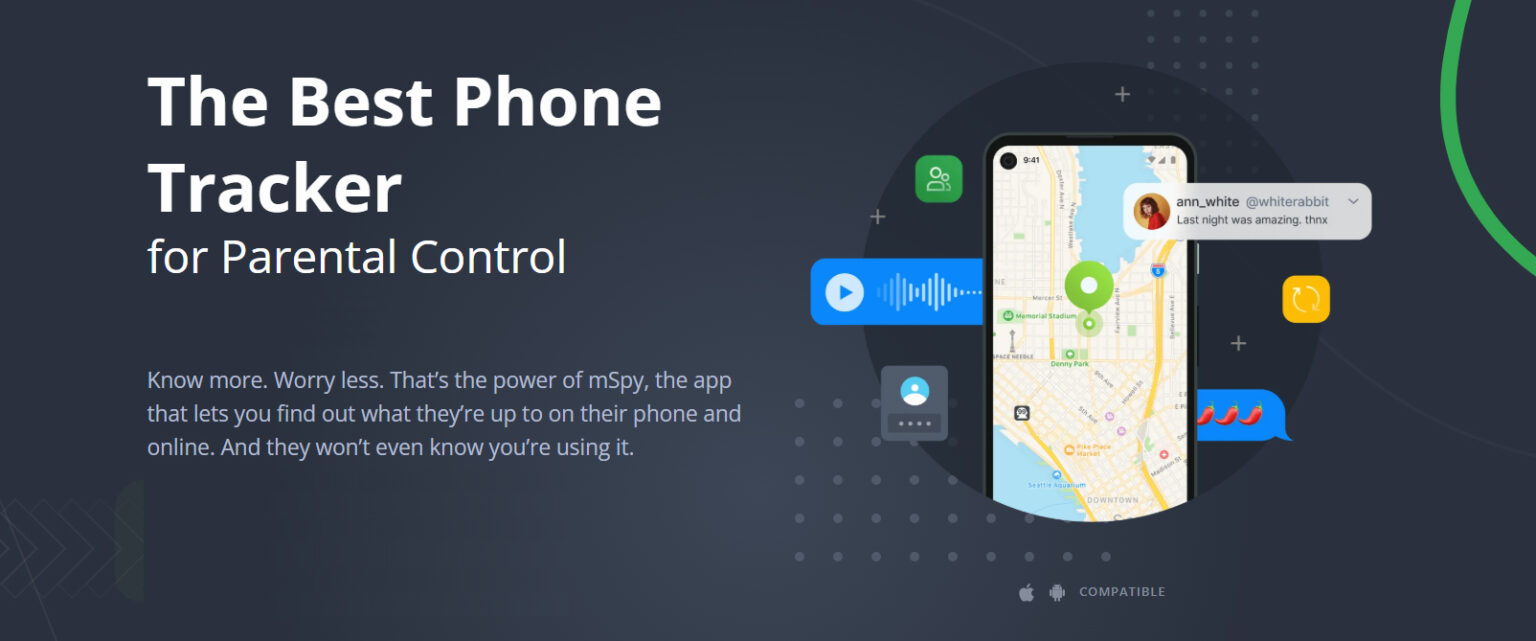
mSpy Pros and Cons
| Pros | Cons |
|---|---|
| Comprehensive social media monitoring covering WhatsApp, Snapchat, Instagram, Facebook, and more Reliable GPS tracking and geofencingIntuitive, user-friendly dashboard App and website blocking capabilities Keyword alerting 24/7 customer support with quick response times | Full functionality requires rooting (Android) or jailbreaking (iOS) Lacks core parental control features like screen time management and usage duration limits No free trial and no money-back guarantee Relatively expensiveiOS setup is more complicated Some features (remote camera access, screen recording) are considered overly intrusive |
FlexiSPY – The most expensive and most powerful app
FlexiSPY is one of the most powerful commercial monitoring solutions on the market, boasting “near-total control” over the target device. It supports Android, iOS, Windows, and Mac. Its unique capabilities include real-time call recording (including VoIP), remote microphone activation for ambient listening, a keylogger, and SMS/email interception. The app runs in full stealth mode with no visible icon on the home screen.

FlexiSPY Pros and Cons
| Pros | Cons |
|---|---|
| Most comprehensive advanced features: live call interception, ambient recording, VoIP call recording Can recover deleted messages High data sync frequency (every 5 minutes) Supports a wide range of apps including Tinder, Kik, etc. 24/7 live chat support with decent response times | Very expensive (approx. $68–$149/month) Typically requires rooting or jailbreaking for full functionality Complex installation; not user-friendly for non-technical users Low Trustpilot rating (2.6/5); some users report it as a “scam” Reliability of advanced features is questionable; refund policy is unfriendly Dashboard interface is somewhat cluttered |
iKeyMonitor – An ideal Parental Control App to Safeguard Your Kids
iKeyMonitor offers robust surveillance features but is relatively weak as a parental control tool. Its strengths lie in deep monitoring – such as a keylogger that records all keystrokes, scheduled screenshots, and remote screen recording. It also provides app filtering, GPS tracking, and geofencing. Note that full functionality on iOS devices typically requires jailbreaking.

iKeyMonitor Pros and Cons
| Pros | Cons |
|---|---|
| Powerful keylogging – records all keystrokes Screenshot and screen recording capabilities App filtering and location tracking Keyword alerts Offers a 3-day free trial and a free basic plan Supports both Android and iOS | iOS device must be jailbroken for full use Lacks core parental controls like web filtering and screen time limits Interface not very smooth; overall user experience is mediocre Missing modern features like geofencing and app usage analytics Customer support quality is average No money-back guarantee Pricing is on the higher side May cause noticeable performance lag on older devices |
Norton Family – Best for web monitoring
Norton Family is a traditional parental control solution from a well-known security brand, focusing on transparent monitoring to foster healthy digital habits. It offers comprehensive management features, including web supervision and filtering, screen time limits and scheduling, app oversight, and GPS location tracking with 30-day history. Its unique “School Time” feature blocks distracting websites during specific hours, and it does not require root or jailbreak access.

Norton Family Pros and Cons
| Pros | Cons |
|---|---|
| Full parental control suite: web filtering, app filtering, time limits, location tracking Very easy to use with a friendly interface “School Time” feature automatically restricts web access during class hours Highly accurate location tracking; geofencing up to 2 miles Great value – only $49.99/year Can monitor up to 10 devices 60-day money-back guarantee Backed by Norton’s trusted reputation Web content filter with 47 categories | Does not support macOS devicesLacks social media message scanning Cannot set per-app time limits on desktop devices On iOS, some tracking features require the child to use the Norton Family browser On Windows, children may find ways to bypass web filtering Customer support quality is average Some users report that the app may cause iOS app icons to disappear School Time only blocks websites, not apps |
How to choose the best Parental tool in 2026?
The key isn’t to find the app with the most features – it’s to find the one that best fits your family’s needs, your child’s age, and your parenting philosophy.
1: Clarify Your Core Needs
Different families face different challenges. Prioritising your primary goal makes selection easier.
- Worried about too much screen time?
Prioritise apps with screen time limits, app-specific timers, and scheduled downtime (e.g., bedtime). - Worried about exposure to inappropriate content?
Prioritise apps with strong web filtering, app blocking, and YouTube monitoring. - Worried about physical safety?
Prioritise apps with real-time GPS location, geofencing, and SOS panic buttons. - Worried about online social risks?
Prioritise apps that can monitor major social apps (e.g., WeChat, TikTok) and use AI to detect cyberbullying, depressive tendencies, and other risks. - Looking for all-round management?
Consider a more comprehensive “all-in-one” suite.
2: Adapt Your Strategy to Your Child’s Age
Your approach should evolve as your child grows.
- Ages 6–9 (young children) – Focus on setting simple, clear boundaries. The free built-in tools on phones or tablets (e.g., Apple’s Screen Time) is usually enough. At this stage, accompanied use and co-viewing are more important than technical monitoring.
- Ages 10–12 (pre-teens) – Children seek more independence but still need guidance. Choose apps that provide activity reports and location sharing. Use the app’s data as a conversation starter to help your child reflect on their own screen habits.
- Ages 13–15 (teenagers) – Shift from control to collaboration. Review the reports together and co-create rules. Avoid over-restriction, which can trigger rebellion. Encourage your child to start managing their own screen time with your support.
- Ages 16+ (young adults) – Close monitoring becomes less effective. Adopt a lighter touch. Focus on safety features like location sharing, and place greater emphasis on fostering self-regulation and responsible decision-making.
3: Compare Features and Limitations
- Device compatibility – Check whether the app supports all your child’s devices (iOS, Android, Windows, Mac, etc.).
- Feature depth –
- Screen time management is basic.
- Content filtering – look at the number of categories and customisation options.
- Location tracking – check if it offers real-time and historical location data.
- Social monitoring – verify which apps are supported and what level of detail is captured.
- Ease of use – Choose an app that is simple to set up and has an intuitive dashboard. A complicated app is less likely to be used consistently.
- Price vs. value –
- Free built-in tools are a great starting point.
- Paid apps offer richer features – evaluate whether they are worth the cost for your needs.
4: Pay Attention to Privacy and Trust
Installing monitoring software is inherently intrusive. When choosing, consider:
- Data collection – What data does the app collect, and how is it used?
- Transparency – Choose apps with clear, understandable privacy policies.
- Communication – Talk openly with your child before installing. Explain that the purpose is protection, not surveillance – this helps preserve trust.
Please note: Apps like mSpy, FlexiSPY, and Eyezy are extremely powerful, but their deep-surveillance nature leans more toward espionage and may involve serious privacy and legal risks. Use them only after very careful consideration.
The best app is the one that fits your family’s actual situation and strikes the right balance between protection and trust. We recommend starting with the built-in free features of your devices. If your needs become more complex, then choose a third-party app that specifically addresses those needs.
Avoid the Free Trap: What Every Parent Must Know
Free parental control apps are far more than just “lacking features” – they come with a hidden series of traps, ranging from privacy leaks to damaged parent-child relationships.

1. The Privacy “Exposure” – Your Data Is Being Sold for Free
This is the core and most dangerous issue. Free iPhone 18 Pro Max spy apps often profit by “selling user data,” meaning your and your child’s privacy is being treated as a commodity.
To enable deep monitoring, these apps require extensive phone permissions. Studies show that 80% of parental control apps request access to location, contacts, and storage. More worryingly, many ask for “dangerous permissions” completely unrelated to their stated functions, such as “reading calendars,” “reading contacts,” and “recording audio.”
Some free apps do not encrypt data during transmission. Your browsing history, chat content, and other sensitive information are left “exposed” on the network, making them easy targets for hackers to intercept.
2. Hollow Functionality – Looks Useful, But Is Actually Ineffective
“Free” means severely limited features that cannot provide truly effective protection. Free versions typically only offer basic screen time limits and app blocking. Critical features like social media monitoring, web filtering, and real-time location tracking are either unavailable or provide only very simplistic reports.
Many cheap or free monitoring tools are technically weak and easily bypassed by tech-savvy kids. Free apps also often lack ongoing maintenance and updates. As mobile operating systems update, they may quickly stop working properly, crash frequently, or cause significant lag on the device.
3. The “Cognitive Tax” – Paying for Anxiety, Not for Value
Many free or low-cost “miracle tools” are nothing more than products that precisely prey on parents’ anxieties. They exploit parents’ worries about their children’s internet addiction, taking features that are already built into mobile operating systems for free and repackaging them as “high-tech” products sold at a premium. Some apps use buzzwords like “VIP activation” and “exclusive services” to make you believe that “paying equals professional” – when in reality, their technical capabilities may be extremely weak.
Bottom line: The best iPhone Monitoring App of 2026
In our survey, 58% of parents said that monitoring apps are the best way to protect minors online. Based on our internal testing, we believe that the best parental control app for 2026 is Eyezy. Its features can meet parents’ needs for managing their children’s iPhones, and its price is relatively low. Overall, it is the best choice, especially for parents of children aged 13–15.
Closely following are mSpy, FlexiSPY, Spynger, Norton Family, and iKeyMonitor. Among other essential features, mSpy stands out with reliable location tracking, which is its biggest differentiator from other apps. Norton Family stood out in our tests as a comprehensive solution for families seeking reliable, AI-powered monitoring and broad device coverage. It excels in web filtering and ease of use, offering geofencing and reliable YouTube browser monitoring, making it ideal for younger children. Eyezy provides basic and user-friendly parental controls.
FAQs
Is it legal to use apps like Eyezy or mSpy?
Installing these apps as parental control software on your child’s iPhone is absolutely legal. However, installing them on an adult’s phone is mostly illegal in most jurisdictions. Before installing and using any such app, please strictly refer to your local laws and regulations.
Can I use one subscription for multiple children’s phones?
Generally speaking, one monitoring subscription corresponds to one device. If you want to monitor multiple children’s iPhones at the same time, you can choose the Eyezy Family Kit, which allows you to monitor up to 3 children simultaneously, ensuring peace of mind for parents in families with multiple children.
Which app is the best iPhone monitoring software?
The answer varies from person to person. Personally, I believe Eyezy is the best. In terms of features, price, and after-sales service, this app is absolutely excellent. Some users may think FlexiSPY is the best, and that’s fine – but its price is exorbitant compared to Eyezy.
Pingback: Spy on a Galaxy S26 with the Best Android Monitoring App